The accordion crossed the border. Norteño made it its own.
From polka and bajo sexto to early records: a story of exchange between northeastern Mexico and Texas.
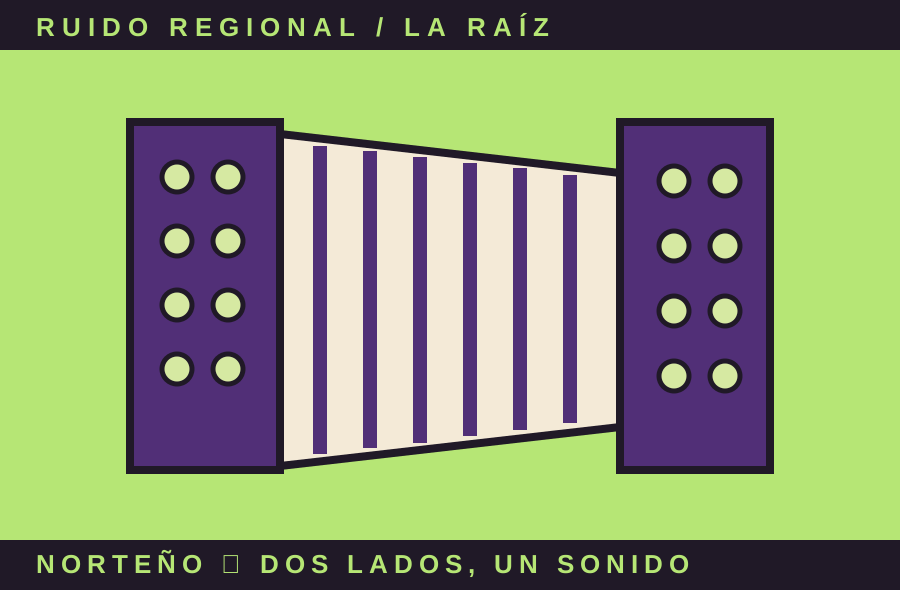
The sound we call norteño did not begin inside a sealed border. Smithsonian Folkways places the development of Texas Mexican music in northeastern Mexico and South Texas during the second half of the 19th century. European migrants brought the accordion; local musicians adopted polkas and waltzes and made them their own. Influence here means adaptation, not imitation.
The typical ensemble described by Folkways brings together accordion, bajo sexto and double bass. The accordion can carry melody and ornament; the bajo sexto supplies rhythmic attack and harmony. Early documented recordings feature one and two row button accordions. Later instruments offered more rows and more possibilities.
Norteño and Tejano Accordion Pioneers 1929–1939 preserves music by Narciso Martínez, Santiago Jiménez, Jesús Casiano and others. Its tracks include polkas, mazurkas, waltzes and even a huapango. That is audible evidence of exchange: the regional label never required one rhythm.
Folkways notes that commercial recordings began in the late 1920s and reached Spanish speaking US radio audiences by the mid 1950s. It also highlights Lydia Mendoza and women’s duos. The familiar image of two men and an accordion leaves out voices that helped build the scene.
Our reading: the accordion reminds us that a root can also be a crossing. When a contemporary group pairs it with pop vocals or urban production, it continues a practice formed by hearing sounds from elsewhere and answering from its own place.